
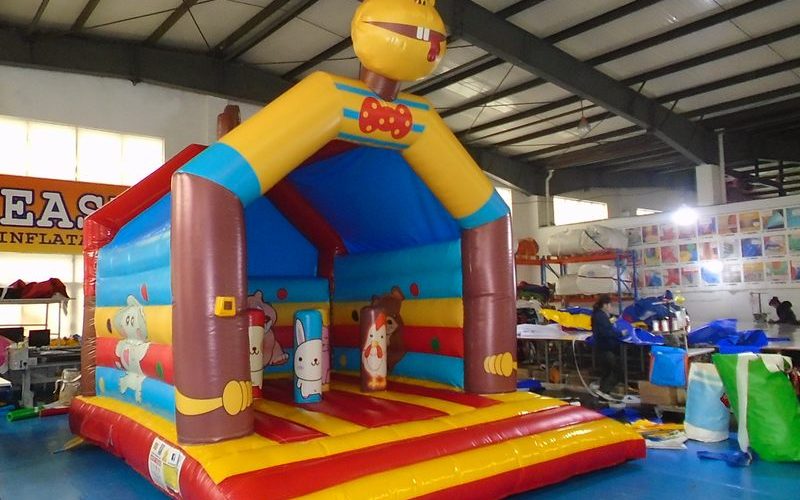
For a busy inflatable hire business, the time required to set up and pack away a bouncy castle matters almost as much as its appearance.
An inflatable that is awkward to unfold, slow to deflate or difficult to roll can delay deliveries, increase labour costs and place unnecessary strain on staff. These problems become more noticeable when several bookings are scheduled on the same day.
A well-designed commercial bouncy castle should be straightforward to transport, position, inflate, secure, clean, deflate and store. Here are the main features that make daily handling easier for hire operators.
A Manageable Packed Size and Clear Layout
The advertised dimensions of a bouncy castle describe its inflated size, but hire companies should also ask about its packed dimensions and weight.
Two inflatables with similar operating sizes may be very different once rolled. Decorative features, internal walls, climbing sections and additional slides can increase the amount of material involved and create a much larger packed unit.
Before buying, consider:
- Whether the packed inflatable will fit inside your van
- How many people will be needed to move it
- Whether it can be handled with your existing trolley
- How much storage space it will require
- Whether the delivery route is likely to include steps or narrow access
A compact, evenly shaped roll is usually easier to load and secure than a wide or irregular package.
It also helps when the inflatable has a logical layout. Once unrolled, the entrance, blower tube and main orientation should be easy to identify. This reduces the time spent rotating or repositioning the unit before inflation.
Practical Blower Tubes and Power Requirements
The blower tube should be positioned where it can be reached easily without creating an obstruction around the entrance or supervision area.
If the inflation tube is too short, badly positioned or difficult to secure, connecting the blower can take longer than necessary. It may also force the operator to place the blower in an inconvenient location.
A practical commercial inflatable should have:
- A clearly visible inflation tube
- Sufficient tube length for a secure connection
- Strong straps for fastening the tube around the blower
- A position that keeps the blower away from users
- Suitable access for checking the connection during operation
The blower requirement should also be clear before purchase. A unit that needs several blowers or a higher electrical load may take longer to install and may not suit every venue.
Operators should confirm the number and power of blowers required, as well as the power supply available at the event site.
Accessible and Clearly Identified Anchor Points
Anchor points are essential safety features, but their design also affects setup time.
They should be easy to locate and positioned along the bottom edge of the inflatable, close to ground level. The D-rings and webbing should not be hidden underneath the unit or placed high on a side wall.
When anchor points are clearly visible, the installation team can secure the inflatable without repeatedly walking around it or lifting sections of PVC to find the correct attachment points.
Before using the inflatable, every anchor point should be inspected for signs of damage. Operators should also use the correct anchoring equipment for the surface and follow the manufacturer’s instructions.
A quick setup must never come at the expense of proper anchoring. Good design simply makes the correct procedure more efficient.
Effective Deflation Openings
Packing away usually takes longer than setting up, particularly if air becomes trapped inside the inflatable.
A commercial bouncy castle should have adequately sized deflation openings in practical locations. Multiple outlets can allow air to escape more quickly, especially on larger castles, combinations and obstacle courses.
Deflation zips or tubes should be:
- Easy to find
- Easy to reach
- Strong enough for regular commercial use
- Protected against accidental opening during operation
- Positioned to release air from the main internal sections
A simple pack-away routine may include the following steps:
- Make sure all users have left the inflatable.
- Remove loose accessories and safety mats.
- Disconnect the blower safely.
- Open the designated deflation outlets.
- Allow the structure to collapse naturally.
- Push trapped air towards the open outlets.
- Fold and roll the inflatable according to the recommended procedure.
Pulling, folding or rolling the unit too early can trap large pockets of air and make the final package unnecessarily bulky.
A Shape That Folds Neatly
Simple shapes are generally easier to fold than designs with many separate sections, tall decorative features or complex internal structures.
This does not mean that every hire business should only purchase basic bouncy castles. Combination units, slides and obstacle courses can generate strong demand. However, their added features may require more time and staff to pack correctly.
A well-designed inflatable should collapse in a reasonably predictable way. Operators should be able to fold the side walls towards the centre and create a roll that is narrow enough for transport and storage.
The position of steps, slides, arches and internal obstacles can affect how evenly the unit folds. Large raised sections may also trap air if the deflation outlets are not positioned effectively.
When considering a new inflatable, ask to see a packing demonstration or video. This can reveal practical issues that are not visible in standard product photographs.
Modular or Single-Piece Construction
Whether a single-piece or modular design is easier to handle depends on the size and purpose of the inflatable.
A smaller bouncy castle is usually most convenient as one complete unit. There are fewer connections to check, fewer parts to count and less risk of leaving a component behind.
For a large obstacle course or inflatable activity centre, modular construction may be more practical. Dividing the product into separate sections can reduce the weight of each packed roll and make loading easier.
However, modular equipment also requires:
- Correct alignment during installation
- Secure connections between sections
- Additional inspection points
- Clear labelling of every component
- A reliable system for keeping the parts together
The best option is not always the design with the fewest sections. It is the design that can be handled safely by the available team and transported using the company’s existing vehicles and equipment.
Easy Access for Cleaning and Drying
An inflatable should not be packed away while it is dirty or wet. Moisture left inside a tightly rolled unit can lead to unpleasant odours, staining and mould growth.
Designs with open, accessible play areas are usually easier to inspect and clean. Staff should be able to reach the bouncing surface, entrance step and other frequently touched areas without difficulty.
Particular attention may be needed around:
- Entrance steps
- Slide lanes and landing areas
- Climbing sections
- Internal corners
- Netting edges
- Seams and floor joints
- Areas underneath removable features
If an inflatable becomes wet, it should be fully dried before long-term storage. A design with good access and effective deflation openings will make this process easier.
Complicated decorative features and enclosed areas may look impressive, but operators should consider how they will be cleaned and dried after repeated hires.
A Consistent Setup and Folding Routine
Even a well-designed bouncy castle can be difficult to handle if staff use a different process every time.
Creating a consistent routine helps teams work more quickly and reduces the risk of missed checks. It also makes training easier when new employees join the business.
A practical setup routine should cover:
- Unloading and positioning
- Ground inspection
- Unrolling and orientation
- Blower connection
- Inflation
- Inspection
- Anchoring
- Safety mat placement
- Final checks before use
The pack-away process should follow a similar checklist in reverse, with additional time allowed for cleaning and drying.
It can also help to mark each storage bag with the product name, packed weight and blower requirement. For modular products, label every section so that staff can identify the correct order of installation.
Taking photographs of a properly folded unit can give employees a useful reference when packing the same inflatable again.
What Should You Check Before Buying?
Ease of handling is difficult to judge from a product image alone. Before ordering a commercial bouncy castle, ask the supplier for practical information about setup, deflation and transport.
Useful questions include:
- What is the packed size and weight?
- How many people are required to move it safely?
- How many blowers does it need?
- Where are the inflation and deflation openings?
- Are all anchor points positioned along the bottom edge and easy to identify?
- Is a packing bag included?
- Is the inflatable supplied as one piece or several sections?
- Can the supplier provide setup and packing instructions?
- Is there a video showing the unit being folded and rolled?
- Will it fit through standard access points when packed?
These details help determine whether the inflatable is suitable for your team, vehicle and storage facilities.
A large or complex product may still be a good investment, but the labour and transport requirements should be understood before purchase.
Final Thoughts
A commercial bouncy castle is easier to set up and pack away when its practical design has been considered as carefully as its appearance.
Manageable packed dimensions, accessible blower tubes, clearly positioned bottom anchor points, effective deflation openings and a predictable folding shape can all save time during daily operations. Easy-to-clean surfaces and clear setup instructions also make the inflatable more suitable for repeated commercial use.
For hire businesses, saving even a few minutes on every installation can make a noticeable difference over a busy season. It can reduce delays, improve staff efficiency and allow more bookings to be completed with the same vehicles and team.
Before buying, look beyond the colours and theme. Consider how the inflatable will be transported, installed, cleaned, deflated and stored after every hire. The easiest product to operate is often the one that provides the best long-term value.