
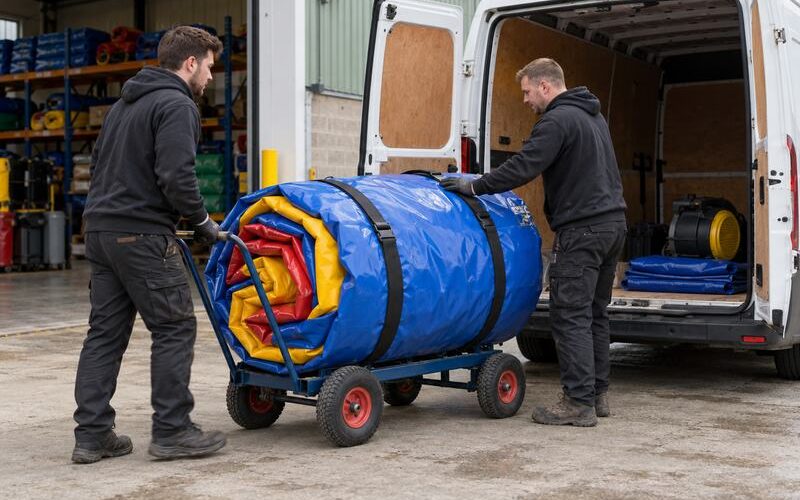
When buying a commercial bouncy castle, most operators focus on its inflated dimensions, design and purchase price. Packed weight is sometimes overlooked, even though it affects almost every stage of the hire process.
A heavier inflatable may require more staff, a larger vehicle, additional storage space and specialist handling equipment. Its packed size can also determine whether it will fit through gates, doors and narrow venue entrances.
There is no standard weight for every commercial inflatable. The final figure depends on its dimensions, material, structure, reinforcement and additional features. Understanding these factors before purchasing can help you choose equipment that suits both your customers and your daily operation.
How Much Does a Commercial Bouncy Castle Weigh?
A standard commercial bouncy castle may weigh approximately 70 to 120kg when clean and dry. Compact models can be lighter, while larger or more heavily reinforced designs may exceed this range.
As a general guide:
- Standard commercial bouncy castles: approximately 70–120kg
- Bouncy castle and slide combinations: approximately 100–180kg
- Commercial inflatable slides: approximately 130–250kg
- Large obstacle courses: approximately 150–300kg or more
- Multi-part inflatables: total weight divided between separate packed sections
These figures are estimates rather than fixed specifications. Two inflatables with similar external dimensions can have noticeably different weights because of their material, internal construction and number of reinforced sections.
Always request the weight of the specific model you are considering instead of relying only on a general product category.
Net Weight, Packed Weight and Shipping Weight
Buyers may see several different weight figures on quotations, packing lists and shipping documents. They do not always mean the same thing.
Net weight normally refers to the inflatable itself, without its outer packaging or separate accessories.
Packed weight may include the inflatable, storage bag, straps and other items packed in the same bundle.
Shipping or gross weight includes the product and all packaging used for transport. Depending on the shipment, this may include a protective bag, carton, pallet or wooden case.
Blowers, ground stakes, repair materials and safety mats may be packed separately, so their weight may not be included in the inflatable’s figure.
Before arranging transport or planning vehicle capacity, confirm exactly what each quoted weight includes.
Why Are Commercial Inflatables So Heavy?
Commercial inflatables are designed for frequent setup, transport and use. They are normally made from heavier and more durable materials than small inflatables intended for occasional domestic use.
Several factors contribute to their overall weight.
Commercial-Grade Material
PVC tarpaulin is commonly used for commercial bouncy castles, slides and obstacle courses. Thicker material adds weight, but it also provides greater resistance to abrasion, stretching and repeated handling.
The total surface area matters as much as the material thickness. A large inflatable contains substantial amounts of PVC across its floor, walls, steps, covers and internal sections.
Reinforcement
High-stress areas often require additional layers of material. These can include:
- Entrance steps
- Bouncing surfaces
- Slide platforms
- Climbing sections
- Anchor points
- Seams and corners
- Blower tubes
- User-contact areas
A well-reinforced inflatable may therefore be heavier than a visually similar product with a simpler internal structure.
Slides and Climbing Sections
Adding a slide involves more than attaching a slide lane to a standard castle. The structure may also require a climbing wall, raised platform, side walls, landing area and additional reinforcement.
This is why a castle-and-slide combination is usually heavier and bulkier than a standard bouncy castle of a similar width.
Roofs and Decorative Features
Rain covers, enclosed roofs, turrets, arches and three-dimensional decorations all require additional material. Individually, these features may add only a modest amount, but together they can noticeably increase the packed weight and size.
Internal Construction
Large commercial inflatables contain internal walls and structural supports that are not visible from the outside. Taller or more complex products may require more internal material to maintain their shape while inflated.
The visible dimensions alone do not always indicate how heavy an inflatable will be once packed.
Packed Size Is Just as Important as Weight
Knowing that an inflatable weighs 100kg does not tell you whether its packed roll will fit through a narrow doorway or into the back of your vehicle.
A relatively light inflatable may form a wide, awkward bundle that is difficult to turn. A heavier model might be divided into two smaller sections that are easier to manage.
Before purchasing, ask for:
- The net weight of the inflatable
- Its approximate packed dimensions
- The number of packed sections
- The weight of each section
- Whether accessories are packed separately
- The recommended number of people for handling
Before ordering from East Inflatables or another commercial manufacturer, request both the weight and packed dimensions of the specific model. This information will help you plan vehicle space, storage and delivery access before the inflatable arrives.
Can One Person Move a Commercial Bouncy Castle?
Some compact commercial inflatables may be manageable by one experienced operator using suitable handling equipment. However, many full-size bouncy castles should not be moved by one person alone.
Even when the stated weight appears manageable, the packed roll may be:
- Too wide to grip securely
- Unevenly balanced
- Difficult to control on a slope
- Awkward to turn through doors
- Too large for one person to see around
- Difficult to lift into a vehicle
Site conditions can make a major difference. Moving an inflatable across a smooth warehouse floor is very different from taking it over wet grass, gravel, steps or a long garden path.
There is no single weight that is automatically safe for one person to handle. The operator should consider the load, packed shape, route, available equipment and individual capability.
For heavier inflatables, a two-person or larger crew may be safer and more efficient.
Use Suitable Handling Equipment
The correct equipment can reduce physical strain and make deliveries faster. The most suitable option depends on the weight, packed shape and venues you normally serve.
Useful equipment may include:
- Heavy-duty sack trucks
- Inflatable dollies
- Flatbed trolleys
- Loading ramps
- Tail lifts
- Winches
- Ratchet straps
- Protective ground sheets
Any trolley or dolly should be rated for the load and wide enough to support the roll securely. A small domestic sack truck may not be suitable for a heavy commercial inflatable.
Pneumatic tyres can be helpful on grass and uneven ground, while solid wheels may work well on smooth warehouse floors. Operators serving different types of venues may need more than one handling solution.
Straps can keep the roll stable during movement and transport, but they should not be used to force the inflatable into an excessively tight shape.
Plan Your Vehicle and Venue Access
A commercial inflatable must fit inside the vehicle along with its blower, ground sheet, stakes, safety mats and handling equipment.
Before purchasing a larger unit, check:
- Rear and side door openings
- Internal load-space dimensions
- Vehicle payload
- Floor strength
- Space for a trolley or dolly
- Safe weight distribution
- Suitable load-securing points
A packed inflatable may technically fit into a van but still be difficult to load if the door opening is too narrow or there is not enough space to turn the roll.
Payload is equally important. The combined weight of several inflatables, blowers, accessories, staff and other equipment must remain within the vehicle’s permitted limit.
Venue access should also be confirmed before accepting a booking. Ask about:
- Distance from parking to the setup area
- Width of doors and garden gates
- Steps, stairs and narrow corridors
- Sharp corners
- Mud, gravel or steep slopes
- Vehicle height restrictions
- Lift dimensions at indoor venues
- Whether direct vehicle access is available
Photos or a short video of the route can be useful for unfamiliar venues. A large garden or hall does not guarantee easy access if the only entrance is narrow or reached by steps.
Wet Inflatables Can Be Much Harder to Move
A listed product weight usually refers to a clean and dry inflatable. After rain, water may remain on the surface and become trapped between folded sections.
Mud and wet grass can add further weight while making the packed roll slippery and more difficult to control.
If an inflatable must be collected wet:
- Remove as much standing water as possible
- Clear away mud and loose debris
- Use a clean ground sheet during folding
- Allow additional time and staff for handling
- Use appropriate transport equipment
- Reinflate and dry it as soon as possible
Never assume that the normal collection process will be sufficient after heavy rain. Slippery ground and additional water weight can make lifting and movement more difficult.
A wet inflatable should not remain tightly rolled in storage because trapped moisture can lead to mould, staining and unpleasant odours.
Are Multi-Part Inflatables Easier to Handle?
Some large obstacle courses, slides and event attractions are designed in two or more sections rather than as one extremely heavy unit.
A modular design may offer several advantages:
- Lower weight per packed section
- Easier loading and unloading
- Better use of vehicle space
- Simpler movement through narrow entrances
- Easier repair or replacement of one section
- Greater flexibility for different event layouts
However, multi-part designs also require secure connection systems and clear setup procedures. Every section must be assembled and anchored according to the manufacturer’s instructions.
When comparing a single-piece inflatable with a modular alternative, consider both the total weight and the weight of each individual roll.
How Weight Affects Operating Costs
A heavier inflatable may command a higher hire price, but it can also increase operating expenses.
Additional costs may include:
- More staff for each delivery
- A larger vehicle or trailer
- Higher fuel use
- Loading ramps or a tail lift
- Specialist trolleys
- Longer setup and collection times
- More storage space
- Higher charges for difficult or distant deliveries
This does not mean that large inflatables are poor investments. Slides and obstacle courses can attract schools, festivals, community events and corporate customers that are willing to pay higher hire rates.
The important question is whether your business can handle the equipment efficiently. A popular inflatable may still provide a poor return if every booking requires extra staff and transport costs that were not included in the original calculation.
Questions to Ask Before Purchasing
Before ordering a commercial bouncy castle or another large inflatable, confirm:
- What is the exact net weight?
- What is the packed or gross weight?
- What are the packed dimensions?
- Is it packed as one roll or several sections?
- How much does each section weigh?
- Are the blower and accessories packed separately?
- How many people are recommended for handling?
- What type of trolley or dolly is suitable?
- Will the packed unit fit through standard doors and gates?
- What size vehicle is normally required?
- Are a storage bag and securing straps included?
Keep this information with the product records so that staff can select the correct vehicle, handling equipment and number of people for each booking.
If an exact weight is unavailable before production, ask for an estimate based on a comparable model and request the final packed weight before shipping.
Choosing the Right Inflatable for Your Operation
The largest inflatable is not automatically the best choice for every hire company.
A compact unit that can be handled efficiently may complete more bookings in one weekend than a larger product requiring extra staff and a specialist vehicle. On the other hand, an established operator serving schools and public events may benefit from larger attractions with higher hire values.
Before purchasing, consider:
- Your available staff
- Vehicle capacity
- Storage space
- Typical venue access
- Average booking value
- Local customer demand
- Setup and collection times
- Existing handling equipment
The right inflatable should suit both the customers you serve and the practical capabilities of your business.
Final Thoughts
The weight of a commercial bouncy castle can vary considerably. A compact castle may weigh less than 100kg, while a large slide, combination unit or obstacle course may weigh several hundred kilograms.
The exact figure matters because it affects staffing, vehicles, storage, access and the time required for every booking.
Always request the net weight, packed weight and packed dimensions before placing an order. Consider how the inflatable will be moved when it is dry, when it is wet and when access to the venue is difficult.
Choosing equipment that your team can transport and handle efficiently will reduce physical strain, simplify deliveries and help each inflatable remain a practical and profitable part of your hire fleet.