
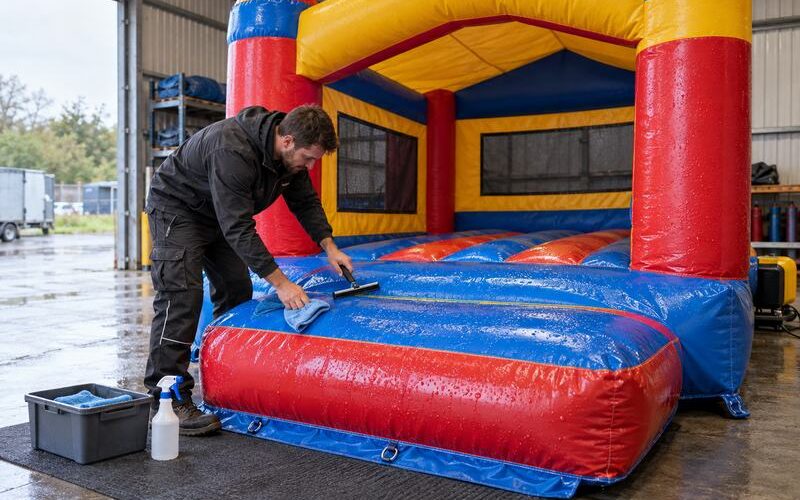
Unexpected rain is a common challenge for bouncy castle hire operators. Even when the forecast looks favourable, a short shower can leave an inflatable wet, muddy and difficult to pack away.
Rain does not automatically damage a commercial bouncy castle. The real risk comes from leaving it wet while tightly folded or placing it directly into storage. Trapped moisture can cause unpleasant smells, staining, mould and mildew. It may also affect the appearance of the inflatable and create extra work before its next booking.
If a bouncy castle gets wet, the priority is to stop use when conditions become unsuitable, transport it carefully and dry it thoroughly as soon as possible. The following process can help protect the equipment and keep it ready for future hires.
Can You Pack Away a Wet Bouncy Castle?
Sometimes there is no practical alternative. The venue may be closing, the rain may continue or the inflatable may need to be removed before it can dry.
A wet bouncy castle can be packed temporarily for transport, but it should not remain rolled up for an extended period. Moisture trapped between layers of PVC creates ideal conditions for mould and mildew.
Before packing a wet inflatable:
- Remove as much standing water as possible
- Wipe accessible surfaces with clean towels
- Clear away loose mud, grass and debris
- Use a clean ground sheet during folding
- Keep wet equipment separate from dry inflatables
- Mark the unit clearly as requiring cleaning and drying
Treat wet packing as a temporary transport measure rather than the final storage process. Reinflate the unit as soon as a suitable drying area becomes available.
Step 1: Stop Use and Make the Area Safe
If rain starts during a booking, the safety of users comes first.
Wet entrance steps, bouncing beds and slide surfaces may become slippery. Electrical equipment also needs to be protected from water, while rain can arrive alongside stronger winds or rapidly changing weather conditions.
Follow the operating instructions provided with the inflatable and blower. If the conditions are no longer suitable, ask all users to leave the inflatable safely and prevent anyone from re-entering.
When it is safe to do so, isolate the electrical supply and protect the blower, plugs and extension equipment from moisture. Do not allow children to continue using the inflatable simply because the rain appears light.
Before beginning collection, check that the surrounding ground is safe for staff. Wet grass and mud can make it more difficult to move a heavy commercial inflatable without slipping or damaging the equipment.
Step 2: Remove Water, Mud and Debris
Remove as much water as possible before folding or cleaning the inflatable.
A soft squeegee or absorbent cloth can help move standing water away from the bouncing area, entrance and slide sections. Work carefully around seams, air outlets and blower tubes.
Pay particular attention to:
- Entrance steps
- Bouncing surfaces
- Slide platforms and lanes
- Roof or shower-cover sections
- Corners and seams
- Blower and deflation tubes
- The base and underside
Wet inflatables can become considerably heavier than dry ones. Avoid dragging the unit across rough ground or lifting it by handles that are not intended for carrying its full weight.
Rain often brings mud, wet grass and other debris onto the inflatable. Remove loose dirt with a soft brush or cloth before it dries. Dried mud may be harder to clean and could scratch the surface if scrubbed aggressively.
If the underside is dirty, reposition the inflatable carefully so that it can be inspected and cleaned. Use enough people and suitable handling equipment when moving large units.
Step 3: Reinflate and Clean the Inflatable
Once the inflatable has returned to your premises, reopen it in a clean, covered and well-ventilated area. Reinflating the unit makes it easier to find trapped water, reach the different surfaces and identify areas that need attention.
Begin by removing any remaining loose dirt. Clean the affected surfaces with warm water and a mild cleaning product that is suitable for the inflatable’s material.
Always follow the manufacturer’s care instructions. If you are using an unfamiliar product, test it on a small, inconspicuous area before cleaning a larger section.
Avoid harsh chemicals, abrasive brushes and pressure washers unless they have been approved for the material. Aggressive cleaning methods may damage printed artwork, surface coatings or exposed stitching.
Give additional attention to high-contact areas, including:
- Entrance steps and handholds
- Bouncing beds
- Safety netting
- Climbing sections
- Slide platforms
- Exit areas
If disinfection is required, first remove visible dirt and then apply a disinfectant suitable for the material. Follow the product instructions for dilution, contact time and rinsing.
Do not mix different cleaning chemicals. Any residue should be removed according to the cleaner’s instructions before the inflatable is dried and returned to use.
Step 4: Dry Every Section Thoroughly
An inflatable should be completely dry before it is folded for storage.
Keep it inflated to improve air circulation and make the surfaces easier to reach. Clean, dry towels can be used to remove remaining moisture, while good ventilation will help the drying process.
Large slides, obstacle courses and covered inflatables may take longer to dry than a standard bouncy castle. They contain more seams, corners, climbing areas and overlapping sections where water can remain hidden.
Check carefully around:
- Seams and reinforcement patches
- Anchor points
- Entrance steps
- Slide beds
- Roof sections
- Netting edges
- Blower tubes
- Deflation openings
- Base corners
- The complete underside
Areas resting on the floor may need to be repositioned so that both sides receive enough airflow.
Avoid placing powerful heaters too close to the inflatable. Excessive heat can damage or distort PVC and other materials. Any drying equipment should be positioned safely and used according to its operating instructions.
Do not assume that the inflatable is dry because the main bouncing surface feels dry. Check it by hand for damp areas, especially around seams and folded sections. A cool patch, damp smell or visible moisture means the unit needs more drying time.
It is better to delay packing than to discover mould before the next booking.
Step 5: Inspect, Fold and Store It Correctly
Once the bouncy castle is clean and completely dry, inspect it before folding.
Look for:
- Cuts, punctures or worn areas
- Loose or damaged stitching
- Damage around anchor points
- Peeling printed artwork
- Debris trapped in netting
- Damaged zip covers or deflation outlets
- Unusual soft areas while inflated
- Signs of mould or discolouration
Wet conditions can make existing damage easier to notice. Identifying a small problem at the warehouse gives you time to arrange a repair before the next booking.
If any issue could affect safe operation, remove the inflatable from service until it has been properly assessed and repaired.
Fold the dry inflatable on a clean ground sheet. Remove as much air as possible without pulling aggressively on the fabric. Fold the sides evenly and roll the unit carefully, avoiding unnecessary pressure on bulky steps, reinforced areas or fixed components.
Secure the roll with suitable straps and place it in its protective bag or cover if one is supplied.
Store it indoors in a clean, dry and ventilated area. Whenever possible:
- Keep the roll raised off the floor
- Avoid contact with damp walls
- Leave space around equipment for airflow
- Protect it from direct sunlight and pests
- Keep cleaning products away from the inflatable
- Avoid stacking excessive weight on top
- Store blowers and electrical equipment in a separate dry location
Label each unit clearly so that staff can see whether it is clean, inspected and ready for hire.
What Should You Do If Mould Appears?
If mould or mildew is found, separate the affected inflatable from clean equipment and examine the extent of the problem.
Do not automatically use strong bleach or another aggressive chemical. Some products can discolour the surface, damage artwork or affect protective coatings.
Refer to the manufacturer’s care instructions and use only a treatment suitable for the inflatable’s material. Test the cleaning solution on a small hidden area first.
If mould has spread across a large area, entered difficult internal sections or appears alongside deterioration of the material, professional assessment may be necessary.
Do not return the inflatable to hire until it has been properly cleaned, completely dried and confirmed to be suitable for use.
Create a Wet-Weather Routine
A clear wet-weather procedure can prevent a difficult collection from turning into long-term equipment damage.
Your routine may include:
- Checking the forecast before every outdoor booking
- Carrying clean towels and suitable cleaning materials
- Using clean ground sheets during setup and collection
- Protecting blowers and electrical equipment from water
- Keeping wet inflatables separate from dry stock
- Labelling units that require immediate attention
- Reserving a covered space for cleaning and drying
- Recording inspections, cleaning and repairs
- Training staff to handle wet equipment safely
This is particularly important when several inflatables return from different bookings on the same day. Without a clear system, a wet unit may be placed into storage and forgotten.
A simple cleaning record can show when the inflatable was returned, when it was dried and whether any damage was discovered. This helps staff prepare equipment confidently for the next booking.
Final Thoughts
Getting caught in the rain does not automatically ruin a bouncy castle. Most wet inflatables can return to service without lasting problems when they are handled promptly and correctly.
The essential process is straightforward: stop use when conditions become unsuitable, remove standing water and dirt, reinflate the unit, clean it carefully, dry every section and inspect it before storage.
The biggest mistake is leaving a wet inflatable tightly packed for too long. Spending extra time cleaning and drying it can help prevent mould, unpleasant smells, staining and avoidable repair costs.
For hire operators dealing with unpredictable British weather, an organised wet-weather routine is an important part of protecting commercial inflatables and keeping them ready for the next booking.