
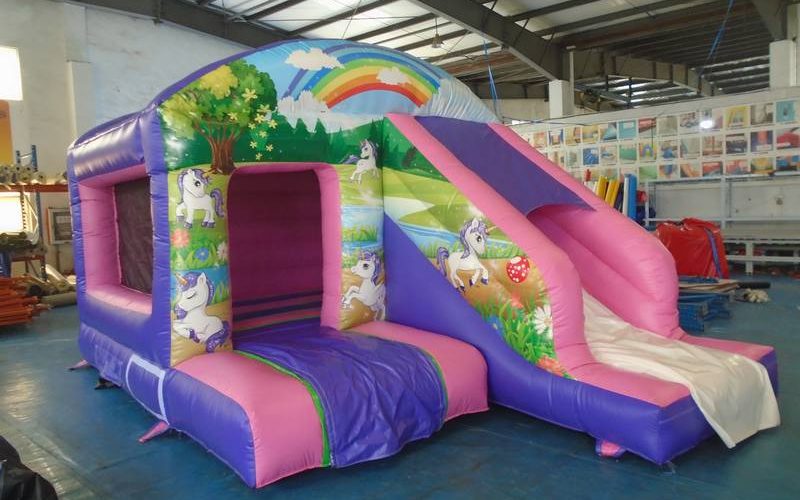
Two commercial inflatables can leave the factory looking almost identical.
Yet five years later, one may still be generating bookings every weekend while the other has already been replaced.
So what causes such a dramatic difference in lifespan?
The answer isn’t usually one single factor. Instead, it’s often the result of material quality, construction methods, maintenance habits, storage conditions, and how the inflatable is used over time.
Understanding these factors can help rental companies, schools, event organisers, and first-time buyers make smarter purchasing decisions and get better long-term value from their investment.
Reason #1: Material Quality Matters More Than Most Buyers Realise
The material used during manufacturing is one of the biggest factors affecting inflatable lifespan.
Commercial inflatables are subjected to constant pressure, repeated folding, transportation, setup, and customer use.
Lower-quality materials may initially look similar to premium materials, but the difference often becomes apparent after months or years of operation.
Higher-quality PVC materials generally offer:
- Better abrasion resistance
- Greater tear resistance
- Improved UV protection
- Stronger long-term performance
For businesses that operate inflatables regularly, investing in durable materials often pays for itself through a longer service life and reduced repair costs.
Reason #2: Reinforcement Makes a Huge Difference
Even the best material can fail if the inflatable is not properly reinforced.
The areas that experience the greatest stress are usually:
- Seams
- Corners
- Entrance steps
- Slide lanes
- Anchor points
Commercial inflatables designed for long-term use often include additional reinforcement in these critical areas.
Stronger stitching and reinforced stress points help prevent premature wear and reduce the likelihood of seam failures over time.
Many lifespan differences become visible first at these high-stress locations.
Reason #3: Usage Frequency Plays a Major Role
Not all inflatables are used in the same way.
A family may use a residential inflatable a few times each year.
A commercial rental company may operate the same inflatable every weekend throughout the season.
Some inflatables are used:
- Once or twice per month
- Every weekend
- Several times per week
- Daily during peak periods
Naturally, an inflatable used 200 times per year will experience more wear than one used 20 times per year.
When comparing lifespan, usage levels should always be taken into account.
Reason #4: The Ground Surface Matters
The surface beneath an inflatable can have a significant impact on longevity.
Grass generally causes less wear than rough concrete, gravel, or uneven ground.
Repeated friction against abrasive surfaces can gradually damage the underside of the inflatable.
Using a quality ground sheet can help reduce:
- Scratches
- Abrasion
- Dirt accumulation
- Moisture exposure
Over many years of operation, these small reductions in wear can make a noticeable difference.
Reason #5: Cleaning and Storage Are Often Overlooked
Many operators focus on buying quality equipment but pay less attention to how it is stored.
Proper storage can dramatically extend the lifespan of a commercial inflatable.
Before storage, inflatables should be:
- Cleaned
- Dried thoroughly
- Inspected for damage
- Stored in a dry environment
Moisture is one of the most common causes of long-term damage.
An inflatable that is repeatedly packed away while damp may develop mould, mildew, unpleasant odours, or material deterioration.
Good storage habits are often one of the simplest ways to extend equipment life.
Reason #6: Small Repairs Prevent Bigger Problems
Every inflatable experiences wear over time.
The difference between a 2-year inflatable and a 10-year inflatable is often how maintenance issues are handled.
Small issues may include:
- Minor punctures
- Surface scuffs
- Loose stitching
- Small seam separations
When repaired early, these problems are usually manageable.
When ignored, they can develop into much larger and more expensive repairs.
Regular inspections help identify issues before they become serious.
Many experienced operators schedule routine equipment checks throughout the season to keep their inflatables in good condition.
Is Price Always a Good Indicator of Lifespan?
Not necessarily.
A higher price does not automatically guarantee a longer lifespan.
However, extremely low prices can sometimes indicate compromises in areas such as:
- Material quality
- Reinforcement
- Manufacturing standards
- Quality control
When evaluating an inflatable, it is often more useful to consider overall construction quality rather than focusing solely on the purchase price.
The cheapest inflatable may not always be the most economical option over the long term.
What Do Long-Lasting Inflatables Have in Common?
Commercial inflatables that remain in service for many years often share several characteristics:
- Durable materials
- Reinforced construction
- Proper anchoring
- Careful handling
- Routine maintenance
- Dry and secure storage
No inflatable lasts forever, but consistent attention to these factors can significantly increase its useful lifespan.
Final Thoughts
The lifespan of a commercial inflatable is rarely determined by a single feature.
Material quality, construction methods, usage frequency, ground conditions, maintenance practices, and storage habits all play important roles.
While two inflatables may appear similar when they are brand new, the differences often become clear after years of operation.
For buyers looking to maximise long-term value, it pays to think beyond the initial purchase price and consider the factors that influence durability over time.
A well-built and properly maintained commercial inflatable can continue generating value for many years, while a poorly maintained inflatable may require replacement far sooner than expected.